
"Haitian coffee regions"
200 article(s) found

Full-grained Dominican Coffee Flavor and Taste introduction to boutique coffee beans in manor area
In 1677, about 4,000 French lived in 11 villages in the west of the island. In 1697, France and Spain ceded the western part of the island to France according to the Leswick Treaty of the Alliance War, formally recognizing French sovereignty over Haiti in the western part of the Spanish island, and the eastern part of the Spanish island was called East Santo Domingo. France continues to develop its agricultural economy on the island of Hispaniola.

Coffee Taste Tour teaches you how to choose coffee beans-Latin America
Mexico's most famous coffee beans are mainly from Coatepec, Oaxaca and Chiapas/Tapachula. The acidity is lively, bright and mild, delicate flavor, medium consistency, is a very good choice for formula beans, deep baking performance is also good. In addition, there is also Moxi in some highland producing areas.

Santo Domingo coffee planting information distribution flavor description graded manor description
For professional baristas, please follow the coffee workshop (Wechat official account cafe_style) Dominica's delicious sweet, full-grained coffee the Dominican Republic (Dominican Republic) is next to Haiti, both of which own the island of Hispaniola (Hispaniola). Like its neighbors, the Dominican Republic had a history of revolution and poverty, but now it has

A brief introduction to the Flavor of various Coffee varieties in Latin America
Following Cafe Review (Wechat official account vdailycom) found that Mexico Mexico Cafe opened a small shop of its own. Mexico's most famous coffee beans are mainly from Coatepec, Oaxaca and Chiapas/Tapachula. The acidity is lively, bright and mild, the flavor is delicate, the consistency is medium, it is used in the formula.

Introduction to the characteristics of Dominica coffee flavor and taste manor area
At the beginning of the 17th century, when French, Dutch and British pirates were operating in the west of Hispaniola, France began to allow farmers and merchants to gradually colonize the western part of the Spanish island, which was blocked by mountains on the island. It didn't attract the attention of the Spaniards in the east. [3] in 1677, about 4,000 French lived in 11 villages in the west of the island. In 1697, France and

Introduction to the flavor and taste of Dominica Santo Domingo coffee with excellent acidity
In December 1492, Christopher Columbus arrived on Hispaniola on his first voyage. On his second voyage there in 1493, Santo Domingo became the capital of the island. [3] thousands of Tainos were demoted to slavery and engaged in gold mining. Due to a series of oppression, hunger and disease, by 1535, the Tino had only 60,000 left. 1501, Spain

Introduction of Latin American coffee flavor manor with mild texture and sour taste
The term "Jamaica High Mountain" refers to coffee beans grown in other mountains less than 1,000 meters on the island, which are of relatively ordinary quality and have a mild texture and sour taste. As for "Comprehensive Blue Mountain" (Blue Mountain Blend) or "Blue Mountain" coffee (Blue Mountain Style), it is usually made of good Colombian beans.

Characteristics of Latin American coffee beans introduction to Latin American coffee story
Following Cafe Review (Wechat official account vdailycom) found that Mexico Mexico Cafe opened a small shop of its own. Mexico's most famous coffee beans are mainly from Coatepec, Oaxaca and Chiapas/Tapachula. The acidity is lively, bright and mild, the flavor is delicate, the consistency is medium, it is used in the formula.

Description of Distribution and Flavor in planting Information production area of Santo Domingo Coffee Bean
Professional barista exchanges please follow the coffee workshop (Wechat official account cafe_style) selected Green Mountain, obvious sweet, changeable flavor, sour and sweet, good aroma and long-lasting aftertaste, very recommended! Country of origin: Dominica: Constanza Manor: green Mountain, Montana Verde varieties: Typica main harvest time: November 2010 treatment: water

Information Flavor description of planting Environment in Santo Domingo Coffee production area
Professional barista exchanges please pay attention to the coffee workshop (Wechat official account cafe_style), many countries are located in the hurricane belt, due to the destruction of hurricane disasters, landslides or occasional droughts, farmers fear most, as hurricanes hit continuously in previous years, resulting in an extreme shortage of good beans. Although the latest harvest batches in 2010 have improved, quality batches with good cleanliness are still rare. Fortunately, there are two major combinations in this area.

Introduction of Santo Domingo Coffee single Bean Flavor description Variety planting Development History production area treatment method
For professional baristas, please follow the coffee workshop (Wechat official account cafe_style) Dominica's delicious sweet, full-grained coffee the Dominican Republic (Dominican Republic) is next to Haiti, both of which own the island of Hispaniola (Hispaniola). Like its neighbors, the Dominican Republic had a history of revolution and poverty, but now it has
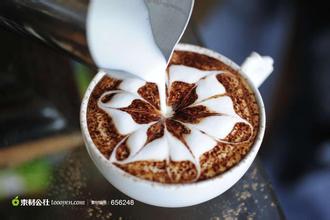
Introduction to the characteristic boutique coffee in Dominica coffee flavor manor with smooth taste
In the early 17th century, when French, Dutch, and British pirates were operating in the western part of Hispaniola, France began to allow farmers and merchants to gradually colonize the western part of the Spanish island, blocked by the island's mountains. Without attracting the attention of the Spaniards in the east, L'Or é al arrived in Santo Domingo in 1801. He abolished slavery on behalf of the French government. In 1802, Napoleon sent

Introduction to the characteristics of Dominica Santo Domingo coffee flavor varieties with light aroma
In 1677, about 4,000 French lived in 11 villages in the west of the island. In 1697, France and Spain ceded the western part of the island to France according to the Leswick Treaty of the Alliance War, formally recognizing French sovereignty over Haiti in the western part of the Spanish island, and the eastern part of the Spanish island was called East Santo Domingo. France continues to develop its agricultural economy on the island of Hispaniola.

What coffee producing areas are there in Cuba? What's the taste of Cuban Crystal Mountain coffee? How to cook Cuban coffee
Professional coffee knowledge exchange more coffee bean information please follow the coffee workshop (Wechat official account cafe_style) what coffee producing areas are there in Cuba? What's the taste of Cuban Crystal Mountain coffee? How to make Cuban coffee to taste good? Cuba, located in the Caribbean, is an island country under communist rule, and its capital is Havana. In Cuba, except for snow-white beaches and snow
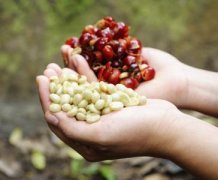
Brief introduction of planting Market Price of Santo Domingo Fine Coffee Bean with excellent acidity
Turning to the introduction of Dominican coffee, the most distinctive features are fresh and elegant, full of particles, excellent acidity and pleasant flavor (two colleagues agree with this). Such flavor characteristics are not only related to the variety and the quality of the soil, but also closely related to the picking and handling of raw beans. Dominica's coffee is selected by the most expensive manual method, workers.

Top 10 coolest cafes in the world
Cat Cafe Cafe des Chats Cafe is located in the heart of Marai, Paris, France, where people can enjoy delicious coffee and play with cats at the same time. People living in the metropolis of Paris cannot keep pets in their apartments for a variety of reasons, and the Cat Cafe makes up for this regret. The manager of the cafe says the meow therapy is really good for health. Here
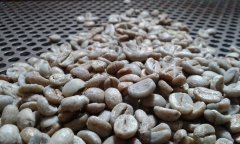
COB: a complex evolutionary history of the official grading system for raw coffee beans in Brazil
For more information on coffee beans, please follow the Coffee Workshop (Wechat official account cafe_style) cob: the complex history of the official classification system in Brazil the origin of cob sensory analysis has provided an important mechanism for pricing goods around the world since the beginning of trade. Color, smell and taste are one of many attributes used to grade a wide range of food and agricultural products.

A brief introduction to the history and culture of the origin and development of Dominican boutique coffee
Boutique coffee has become popular in recent years. High-quality coffee beans produced by some Dominican estates have a rich aroma, mellow taste and moderately bright sour taste, which are not far from the more famous Puerto Rico beans or Jamaican beans, and are also worth tasting. Dominica coffee beans have moderate acidity and rich fruit flavor. Western Hispaniola, 1500 m above sea level

The main producing area of coffee knowledge coffee
Coffee production zones (commonly known as coffee belts) range from 25 degrees north latitude to 30 degrees south latitude, covering many countries in Central, West Africa, the Middle East and South Asia, the Pacific, Latin America and the Caribbean. The reason why coffee cultivation is concentrated in this area is mainly due to the limitation of temperature. Because coffee trees are vulnerable to frost, neither north nor south latitude is suitable, especially in the tropics.
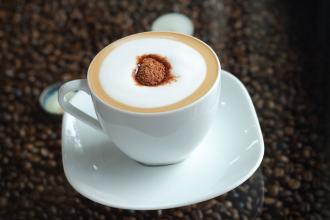
Coffee originating place Coffee emotion
In ancient China, Shennong tasted all kinds of herbs and recorded them one by one, so that later generations could have a systematic understanding of many plants. There is no such person as Shennong in the western world, let alone any written record, so there are different legends about the origin of coffee. Among them, the most common and popular story is the story of the shepherd. Arabia in ancient times